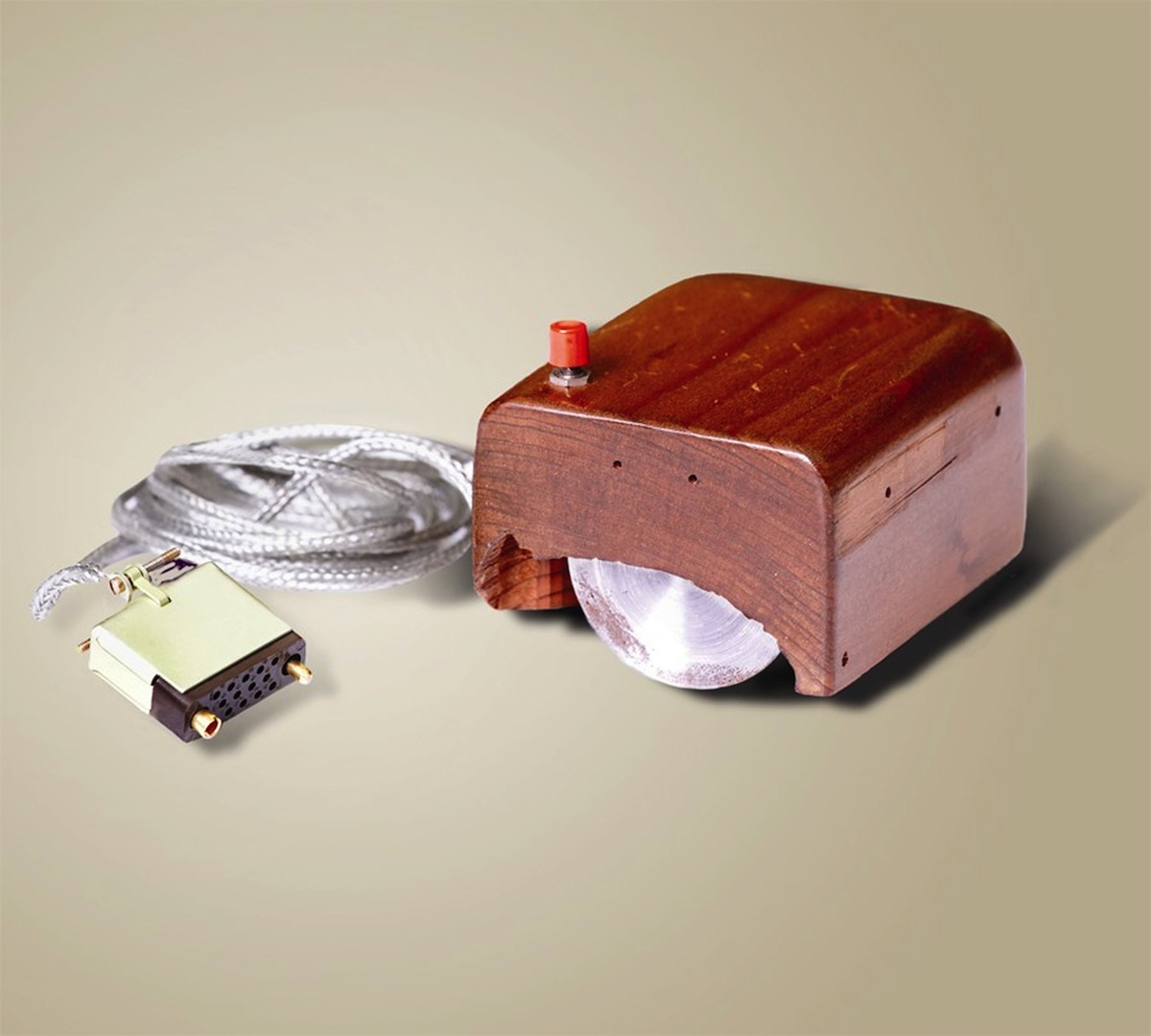
A Mouse for Natural Causes
A CMF design assignment
Natural Causes is a startup focused on creating practical technological devices designed for those who favor a less high-tech appearance and appreciate the transient nature of life.
Mice, keyboards, chargers, lamps, speakers, and other small electronic objects have remarkably short and useful lives but are often made from materials that remain on Earth for centuries.
We are asking you to do a color treatment for a mouse prototype that will be used to convey the possible color palettes of our brand.
You will present us a painted computer mouse and share it as a CMF (Color, Material, and Finish) appearance prototype used to convey the possible color palettes of our brand. We are contracting you to develop a physical color experiment, or in design-speak, create a “boundary object,” to help us think about what a future slowly biodegradable version of our mouse product might look and feel like once we have put it into production.
Our Premise
Natural Causes begins with a different premise: objects, like us, don’t need to last forever. We even designed our company to not live forever. After 80 years, we will discontinue our operations.
The brand embraces usefulness, aging, wear, repair, decomposition, and eventual disappearance. The company imagines its products using biodegradable and lower-impact plastics wherever possible. Materials are selected with an object’s useful lifespan in mind.
Natural Causes isn’t overly morbid about our short time on earth, but we recognize that it can be funny and useful to recognize the uncomfortableness of our temporariness as humans. Knowing that something won’t be here forever can make us pay closer attention to the time we have with it. And we can be respectful about this and a bit cheeky or humorous at the same time.
Natural Causes products want to be good products without becoming archaeological artifacts.
Our Tagline
Natural Causes has a working tagline. “Useful for your lifetime.” This might help you connect with your work.
Brand Character
Natural Causes should feel:
Useful, warm, quiet, tactile, slightly strange, practical, human, imperfect, and temporary.
It should not feel futuristic, cybernetic, militarized, gamer-oriented, or obsessed with artificial intelligence, tech-boosterism, or naive about the challenges the world is facing.
The Natural Causes visual language should avoid the familiar technological vocabulary of glossy black plastic, RGB lighting, carbon-fiber textures, aggressive geometry, neon accents, and the ever-tiring tech dork Pro / Max / Ultra / product claims with ridiculous AI claims.
Look toward companies such as Rapha Cycling, Patagonia, Snow Peak, Muji, HAY, and Bellroy for examples of brands that have found ways to make highly functional objects feel connected to life beyond the computer.
Natural Causes should develop its own version of that sensibility, perhaps a little bit more cheeky and with the lightest sense of humor about our short time on earth.
CMF Direction
The CMF design work (Color, Material, and Finish) should imagine technological objects that are comfortable with the idea that they will age.
The challenge for this CMF work is to create a sophisticated contemporary technological object whose color, material, and finish acknowledge that permanence and tech-obsession aren’t necessarily virtues.
As our CMF designer, you should look toward colors that evoke natural processes such as:
- sprouting
- blooming
- unfurling
- weathering
- fading
- growing
- drying
- oxidizing
- bleaching in the sun
- returning to the ground
Colors that might have names more like:
clay, bone, mushroom, lichen, moss, faded blue, dusty rose, bark, sand, sage, ochre, warm gray, unbleached paper, dried grass, stone, soil.
Also, we don’t want eco-looking beige products. Yuck. We believe in, and have, style. Elegant style.
Natural Causes is not pretending we don’t need electronics. That would be ridiculous. Electronics are a necessary and useful evil for us living in the 2020s, but we at Natural Causes also don’t believe we have to be tech freaks about them, free from reflexive thoughts. We also don’t need to forfeit all our ecological responsibilities just to send a few emails and text messages to plan a party.
A Note About The Mouse Prototype
We have given you a simple black plastic mouse that you can use to explore the color palettes of our brand. Today, unfortunately, Natural Causes will live forever because your mouse pre-production prototype is made of ABS plastic. ABS plastic fragments persist in the environment for up to 1,000 years after its initial mechanical breakdown in about 20 years. The synthetic polymers in ABS resist natural microbial decomposition, so it will be on the planet for almost 15 lifetimes.
So…. ABS is pretty gross, but it is useful for us right now as we can quickly exploring form, color, finish, masking, and coating. We just wanted to let you know that ABS is not the material proposed for the eventual Natural Causes product, but we are where we are. We’ll deal with ABS for now.
This mouse you are painting is an CMF appearance prototype used to convey the possible color palettes of our brand. It is a physical experiment, or in design-speak, a “boundary object,” to help us think about what a future slowly biodegradable version of the product might look and feel like once we have put it into production.
Your Project Tasks
0. Make Your Painter’s Pyramids
Product design, like all other forms of design, has a certain amount of prep work to do and tricks to learn before you can start.
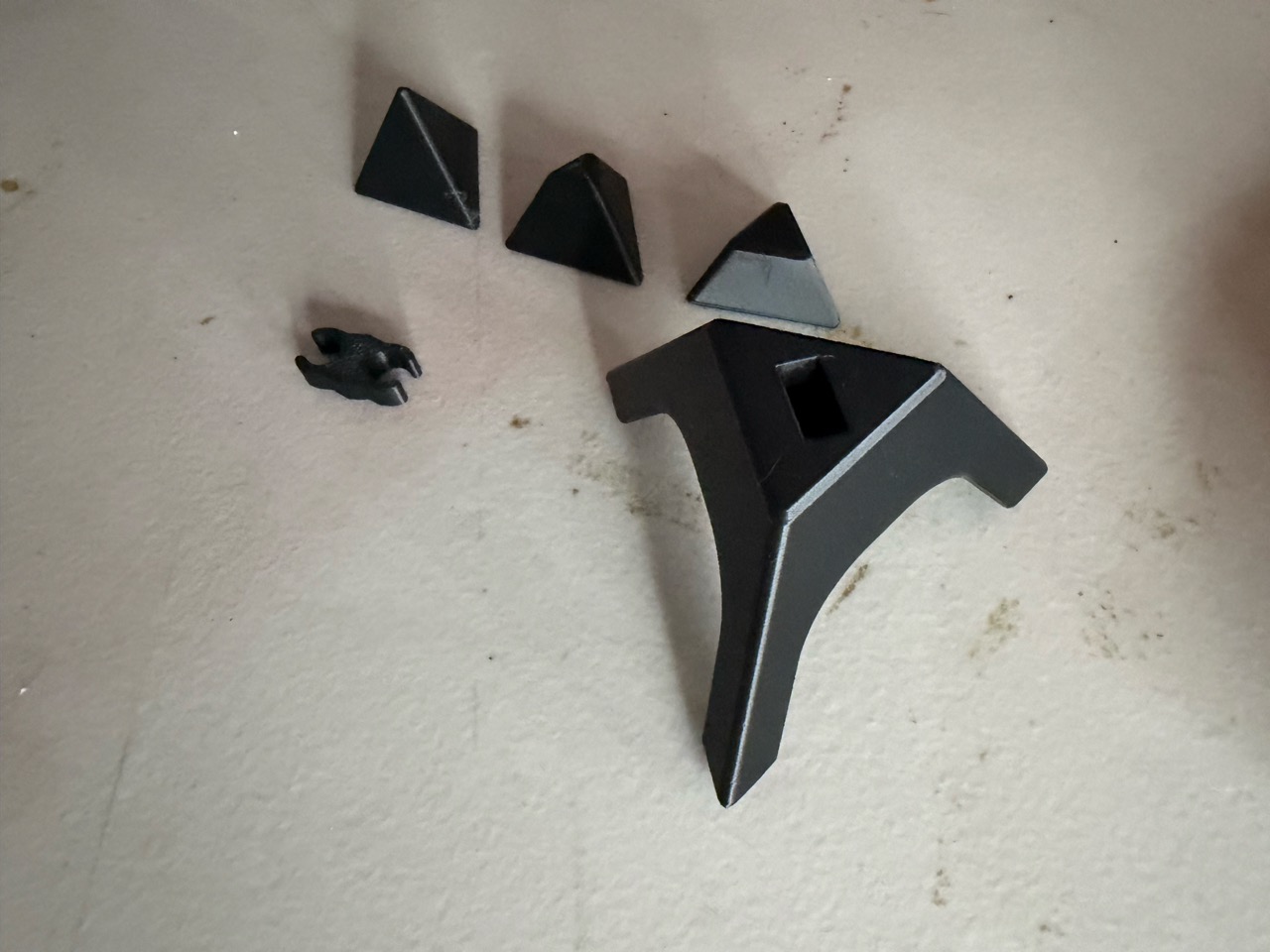
Painter’s pyramids are a great tool for helping you achieve smooth, consistent primer and paint coverage across your prototype.
3D printing some for yourself will get you familiar with 3D printing and help you become a better product designer.
- Your first step in this task is to install Bambu Studio on your computer.
You can download Bambu Studio from the official website.
Here’s a video that shows you how to install Bambu Studio and gives you a quick overview of the software. A few of the setup screens in this video were removed in the most recent version of the software but I think you’ll find the video very helpful regardless.
-
Next, download the Painter’s pyramid with various removable tips 3D models from printables.com
-
Import the models into Bambu Studio. Don’t try to import the PDF file; import the STL files instead.
a. flat-tip.stl
b. blunt-tip.stl
c. tip.stl
d. painters-pyramid-central-block.stl
e. painters-pyramid-base.stl
Here’s a video that gives you a quick overview of how import, prepare, slice, and export the models.
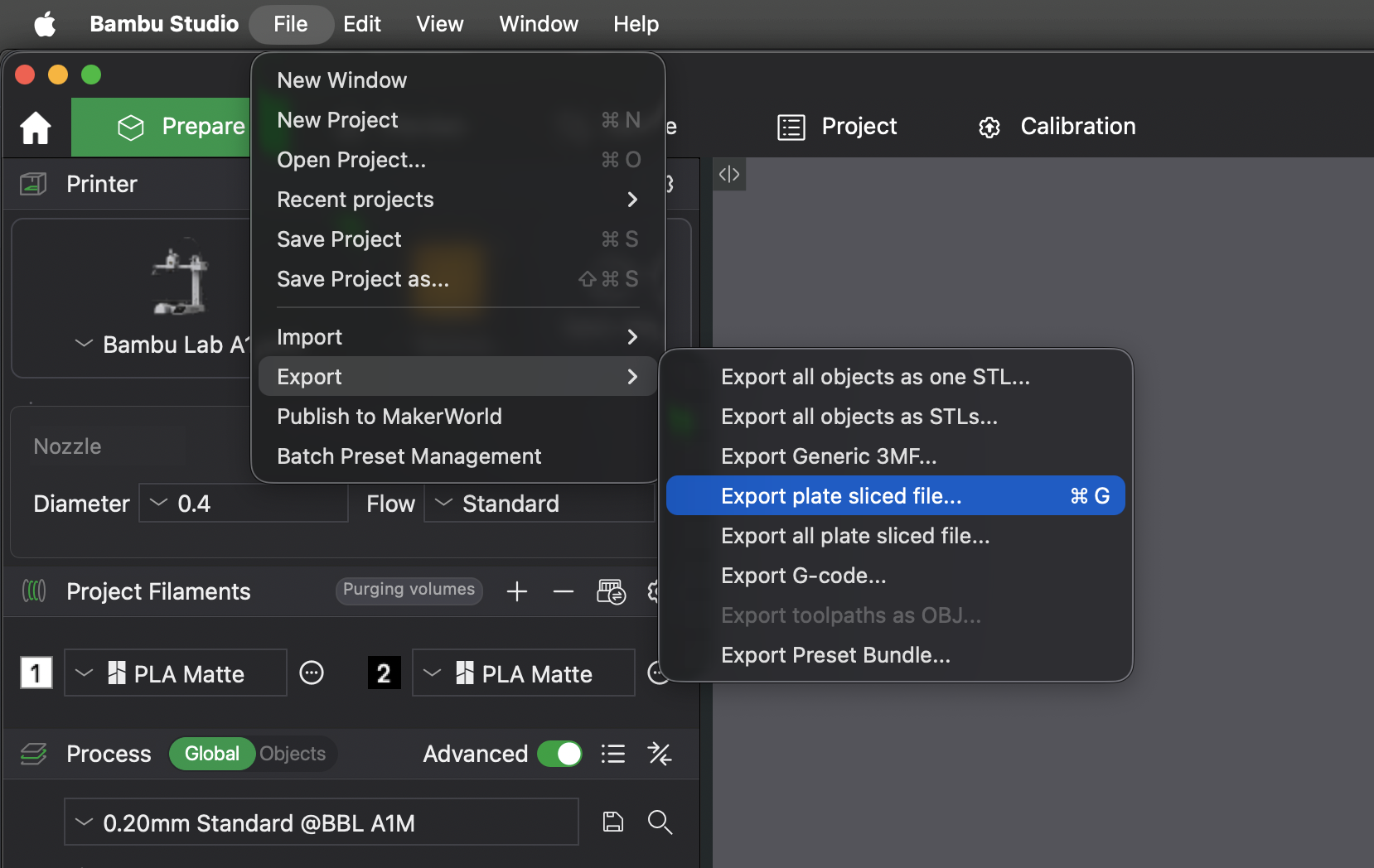
- Prepare, slice, and export the models for your 3D printer. NOTE! You will use the File, Export, “Export plate sliced file” option. This will create a .gcode.3mf file that you can copy to your microSD card.
-
Copy the .gcode.3mf file to your microSD card.
-
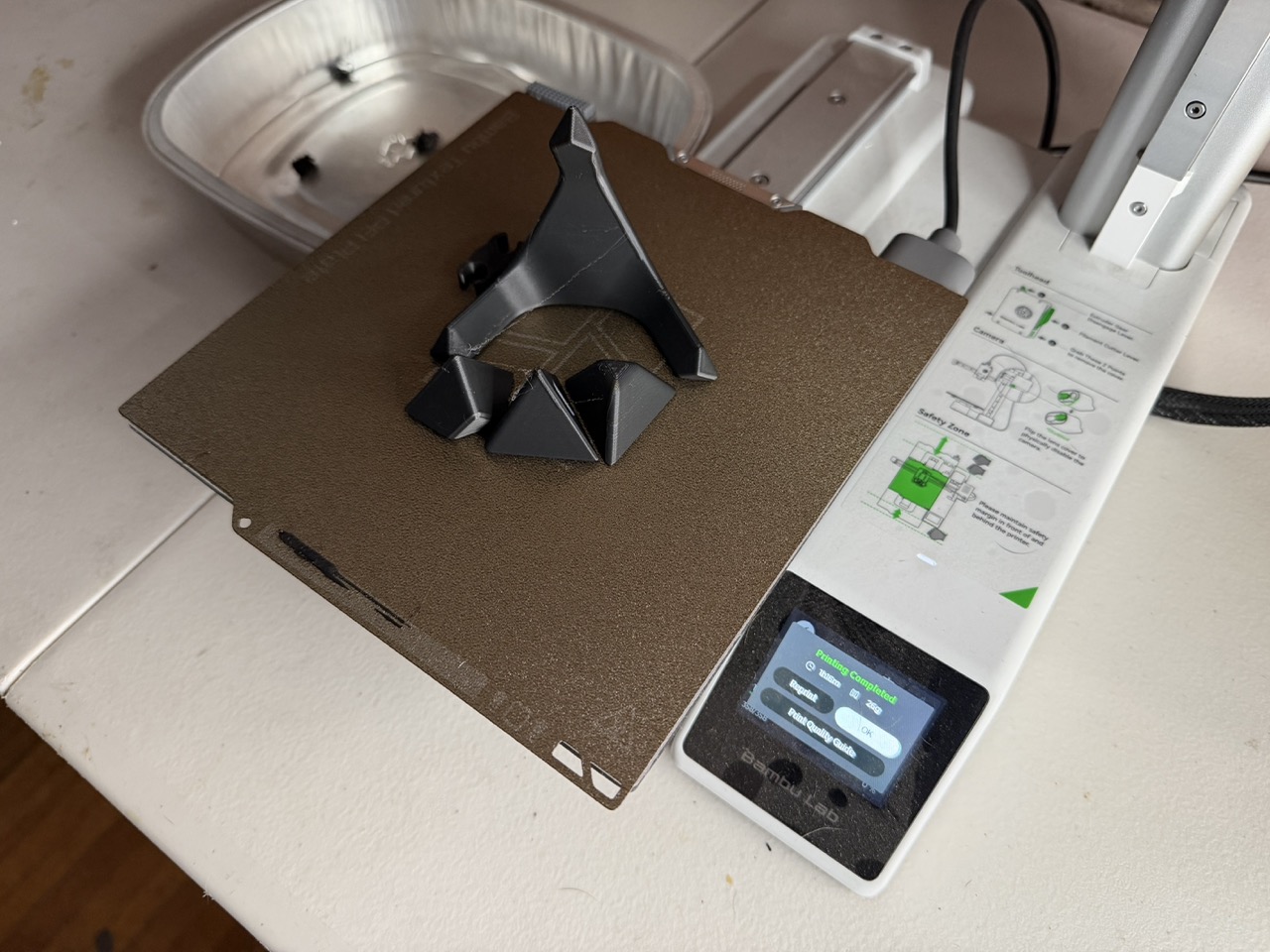
Print the .gcode.3mf file
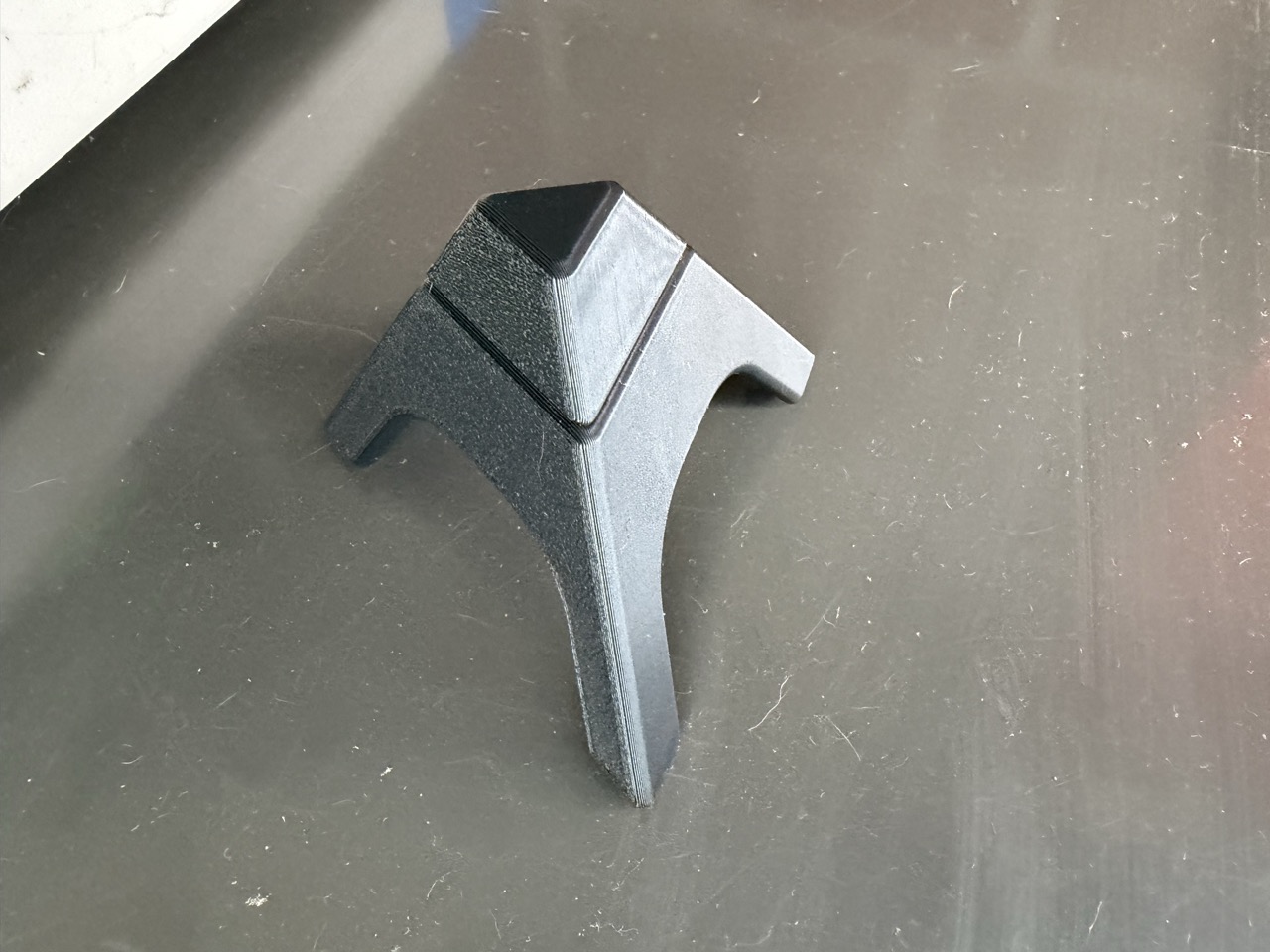
1. Prime Your Prototype
Apply gray primer to the entire mouse and bring the primed prototype to our next class for presentation.
Your primer coat should provide clean, consistent coverage across the complete object, including:
- Top surface and buttons
- Both sides, including convex and concave surfaces
- Entire bottom surface
- Any recessed areas and edges
- The entire scroll wheel. If we scroll the prototype, there should be no black plastic or silicone rubber showing.
Remember, rotate the scroll wheel between light coats of primer to achieve complete primer coverage of the wheel.
Before and after priming, you must handle and transport the primed prototype carefully. Use the plastic bag to assist this process. Scratches on your prototype are not allowed. Also, do not place the mouse in the provided Ziploc bag until the primer has dried. Bring it to class clean and free of scratches, fingerprints, or other damage.
A goal for the end of this first stage is a completely primed mouse.
2. Select Your Primary Color
Choose one color from the provided spray paints as the primary color for your Natural Causes mouse. Tell us what that will be and that you will spray the mouse in this color during class on Wednesday, September 2.
Prepare a digital color swatch that approximates your selected spray color and be prepared to present it alongside your primed mouse prototype in class.
Your color choices should support the Natural Causes identity rather than simply being your favorite color. Consider what the color communicates about an object intended to feel human, useful, temporary, and comfortable with aging.
3. Develop a Natural Causes Color Palette
Using your primary mouse color as a starting point, create a small CMF (Color, Material, and Finish) palette for Natural Causes.
These colors could eventually appear on:
- scroll wheels
- mouse cables or cable sleeves
- buttons
- product markings
- accessories
- packaging
- other Natural Causes products
You may draw from the spray colors provided in the lab or propose your own colors.
Think about the palette as a family. Consider relationships between warm and cool colors, neutrals and accents, saturation, contrast, and how the colors might age together.
DO NOT create a collection of beige “eco” products. Look for softer, natural, weathered, faded, mineral, vegetal, or otherwise unexpected colors that give the brand a recognizable identity.
4. Give Your Mouse a Product Name
Give your mouse product a working product name that fits the Natural Causes identity.
Avoid conventional technology naming such as:
- Mouse Pro X2
- UltraClick
- AI Mouse Max
Instead, think about the language already embedded in Natural Causes Brand Direction and CMF Direction. Consider usefulness, passages of time, weathering, daily life moments, and things eventually disappearing.
The name can be beautiful, mundane, dry, slightly dark, or lightly humorous (but not jokey).
Your name should help us imagine what kind of company Natural Causes is and how the mouse will fit into the brand.
Schedule
Monday Sept 1st
- Install Bambu Lab Studio
- Import your painter’s pyramid 3D model into Bambu Lab Studio
- Slice it, and export it to a micro SD card for printing.
- 3D print your 3D printed painter’s pyramids.
- Review the cans of spray paint we have available and choose the primary color for your mouse.
HELPFUL TIP! 💡: If you are waiting for a 3D printer, use this time to consider your color palette, develop your secondary color palette, and devise a product name.
Wednesday Sept 3rd
All Lab Day: No Lecture or Group Discussion/Crit.
- If you haven’t already, 3D print your 3D printed painter’s pyramids.
- Once printed, prime your mouse with gray primer using the flat-topped painter’s pyramid as a base.
- After the primer is FULLY DRY, and only if fully dry, paint the mouse with your primary color.
Monday Sept 7th
Holiday! No Class!
Wednesday Sept 9th
This is an all-lab day for your 3D printing, painting and paint correction (sanding, re-priming, re-painting). NOTE: If you are waiting for a 3D printer or for the spray booth, use this time to consider your color palette, develop your secondary color palette, and devise a product name.
Monday Sept 14th
- 9AM to 10AM: Continue working on the project.
- 10AM to 11AM: I will do a product photography demonstration. There will also be an “infinty wall” backdrop setup for photographing your mouse.
- 11AM to End: Finish the project and prepare for the 9AM crit on Wednesday.
Wednesday Sept 16th
Bring the following physical objects to our class for our 9AM crit:
- Your 3D printed painter’s pyramid.
- Your completed mouse painted with your primary color.
You should also have the following digital asset uploaded to Canvas and ready to share in class:
A PDF slide deck in landscape orientation with:
- your mouse’s Natural Causes product name,
- a product photo of your mouse,
- a product photo of your painter’s pyramid,
- a slide in your PDF primary color swatch and secondary color swatches.
Rubric
| Points | Criteria |
|---|---|
| 6 pts | Completed Painted Mouse Mouse is fully painted in the selected primary color and presented as a convincing CMF appearance prototype. Paint coverage is complete across the top, sides, bottom, recessed areas, edges, buttons, and entire scroll wheel. Finish is clean and consistent, with careful surface preparation and NO drips, runs, fingerprints, scratches, exposed primer/black plastic, or other defects. |
| 2 pts | Natural Causes CMF Palette Primary and secondary colors form a thoughtful, cohesive palette appropriate to the Natural Causes brand and uses the brands provided Brand Character section of the brief as a reference. Choices demonstrate consideration of the project’s themes of usefulness, aging, impermanence, warmth, and materiality rather than relying on conventional “tech” or generic “eco” aesthetics. |
| 1 pt | Product Name Mouse has a considered working name that fits the Natural Causes identity and avoids conventional technology/product naming clichés. |
| 1 pt | Product Photography Slide deck includes a clear, well-composed photograph of the completed mouse that accurately communicates its color and finish. |
| 1 pt | PDF Presentation PDF slide deck is complete, legible, visually organized, and ready for the 9AM critique. It includes the product name, mouse photograph, primary color swatch, and secondary color swatches. |
| 3 pt | 3D-Printed Painter’s Pyramid Completed and functional painter’s pyramid is brought to the critique and demonstrates successful completion of the introductory 3D-printing workflow. |
| 14 pts | TOTAL |
Presentations and Critque
You will present your work to some of your “critter” classmates. Review the Presenter Guidelines for “A Mouse for Natural Causes”.
You will be a “critter” and provide feedback on the work of your classmates. Review the Critter Guidelines for “A Mouse for Natural Causes”